
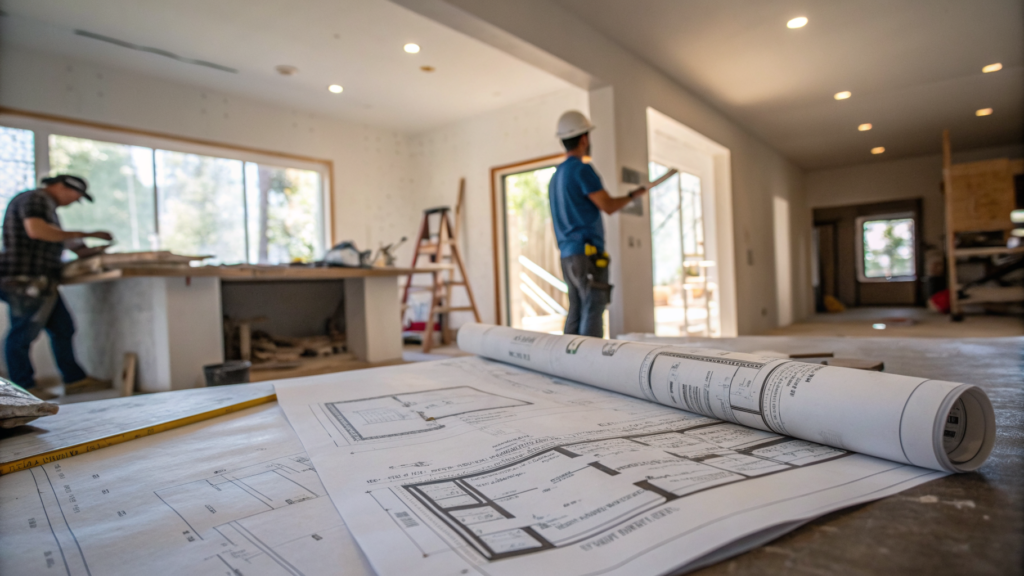
Working with a design-build contractor means your entire renovation stays under one roof, eliminating the coordination headaches that plague traditional projects. Instead of hiring an architect, waiting for plans, then bidding those plans to separate contractors, you get a single team handling design and construction together from day one. This streamlined approach cuts weeks off typical timelines and removes the finger-pointing that happens when designers and builders operate independently.
What Design-Build Actually Means for Your Renovation
Design-build delivery puts architects and contractors on the same team before the first sketch hits paper. Traditional design-bid-build requires you to hire an architect, complete drawings, solicit bids from multiple contractors, then manage communication between parties who may never meet. You become the project manager by default, translating between professionals who speak different languages.
With a single-source renovation team, the people designing your kitchen or room addition are collaborating daily with the crew who will build it. This collaboration catches problems during design rather than during construction. A designer might sketch a beautiful window placement, but the builder immediately flags a structural beam that would require expensive workarounds.
For homeowners tackling full house renovations or complex additions, this matters because older housing stock often hides surprises. Knob-and-tube wiring, outdated seismic retrofitting, and unpermitted previous work create complications that traditional delivery discovers too late.
Three Ways This Approach Reduces Renovation Headaches
First, unified communication eliminates blame-shifting. When the design team and construction team answer to the same company, nobody points fingers when issues arise. Problems get solved instead of debated. You have one phone number to call, one project manager tracking everything.
Second, overlapping phases compress timelines significantly. Traditional delivery forces sequential work where construction cannot start until design is completely finished and bid. Design-build allows construction to begin on early phases while later details are still being refined. A bathroom remodel that might take several months traditionally can often finish considerably faster.
Third, real-time budget alignment prevents sticker shock. Designers working independently often create plans without understanding current material costs or labor realities. You discover the gap when bids come in dramatically over budget. When builders participate in design meetings, they flag cost implications immediately. You can make informed trade-offs before plans are finalized rather than value-engineering your dream project afterward.
When Design-Build Makes Sense
This approach fits best when your project involves multiple trades, structural changes, or permit complexity. Full house renovations, room additions, and major kitchen remodels benefit enormously from integrated delivery. Families adding space to avoid moving find dedicated project management particularly valuable since addition projects involve foundation work, framing, electrical, plumbing, and finishes all requiring tight coordination.
Consider traditional delivery only for simpler projects with minimal design needs or when you already have completed architectural plans you love. Some homeowners also prefer traditional delivery when they have an existing relationship with a specific architect whose vision they want preserved exactly.
Most residential construction projects involving structural work or multiple systems fall squarely into design-build territory. Complex permit requirements, which vary by jurisdiction and should be verified with your local building department, make having one accountable party especially valuable.
Frequently Asked Questions
Does design-build cost more than hiring an architect and contractor separately?
Usually not. While design-build fees might appear higher upfront, total project costs typically run lower because budget alignment happens during design. You avoid expensive change orders, redesign fees, and construction delays that inflate traditional project costs significantly.
Can I still use my own designer with a design-build contractor?
Many design-build teams can incorporate outside designers into their process, though this partially reduces the coordination benefits. Discuss this early since integration works better when established before design begins rather than mid-project.
How involved will I be in design decisions with this approach?
You remain fully involved in every design decision. The difference is that your input gets filtered through both design and construction expertise simultaneously, so you understand feasibility and cost implications in real time. Most homeowners find this makes decisions easier, not harder.
The delivery method you choose shapes everything from timeline to stress level to final cost. If you are planning a kitchen remodel, room addition, or full house renovation and want one organized team handling your project from estimate to final walkthrough, request your free consultation to discuss how design-build might work for your home.